Do Ultrasonic Repellents Work Against Rat Infestations?
When rats take up residence in your property, the search for a quick solution often leads to ultrasonic repellents. These pest gadgets promise an effortless, chemical-free way to send rodents packing from homes, shops, and restaurants. No traps, no poison, no mess. Just plug it in and let the high-frequency sound waves do their thing. But do ultrasonic rat repellents work as advertised?
For anyone dealing with scratching in the walls, a £20 plug-in that solves the problem sounds tempting. Ultrasonic pest repellers are marketed as safe, humane, and effective alternatives to traditional pest control methods. Does an ultrasonic rat repeller stand a real chance against a determined infestation?
How It Works: Science or Sales Pitch?
Electronic rat repellent gadgets are marketed as a modern, humane and non-toxic alternative to traps or poisons. They operate on a simple premise: rats communicate and navigate using sound frequencies beyond human hearing. These devices produce high-frequency sound waves that rodents find irritating, which drives them away from the area.
The technology behind ultrasonic devices
Ultrasonic rat repellers work by converting electricity into high-frequency sound waves (typically 20-65 kHz) outside the range of human hearing. Manufacturers claim this interferes with rats’ communication, creating stress and confusion that ultimately forces them to relocate. Some devices also claim to produce electromagnetic pulses that travel through household wiring, supposedly making the area uncomfortable enough for rats to leave, though real-world results rarely live up to the promise.
Are Ultrasonic Rat Repellers Effective?
You’ll be hard-pressed to find an ultrasonic rat repeller with thousands of reviews with a 4- or 5-star rating. Sound waves, particularly high-frequency ones, have significant physical limitations. Here’s what the marketing seldom mentions:
- Sound waves cannot penetrate solid objects and don’t pass through walls, floors, furniture, or even thick fabrics. If a rat is behind the kitchen cabinets or in the wall cavity, that device plugged into your hallway socket is not doing anything.
- The ultrasonic device has a limited range – it has to be in the same room as the pest to be effective.
- Rats often ignore constant noise. If a sound doesn’t pose real danger, they can tune it out.
- Bigger infestations aren’t bothered at all. Dominant rats will stay put, especially if they’ve got established food and nesting sites.
- Lofts, basements, and drain networks are “dead zones.” Ultrasonic waves simply can’t reach them.
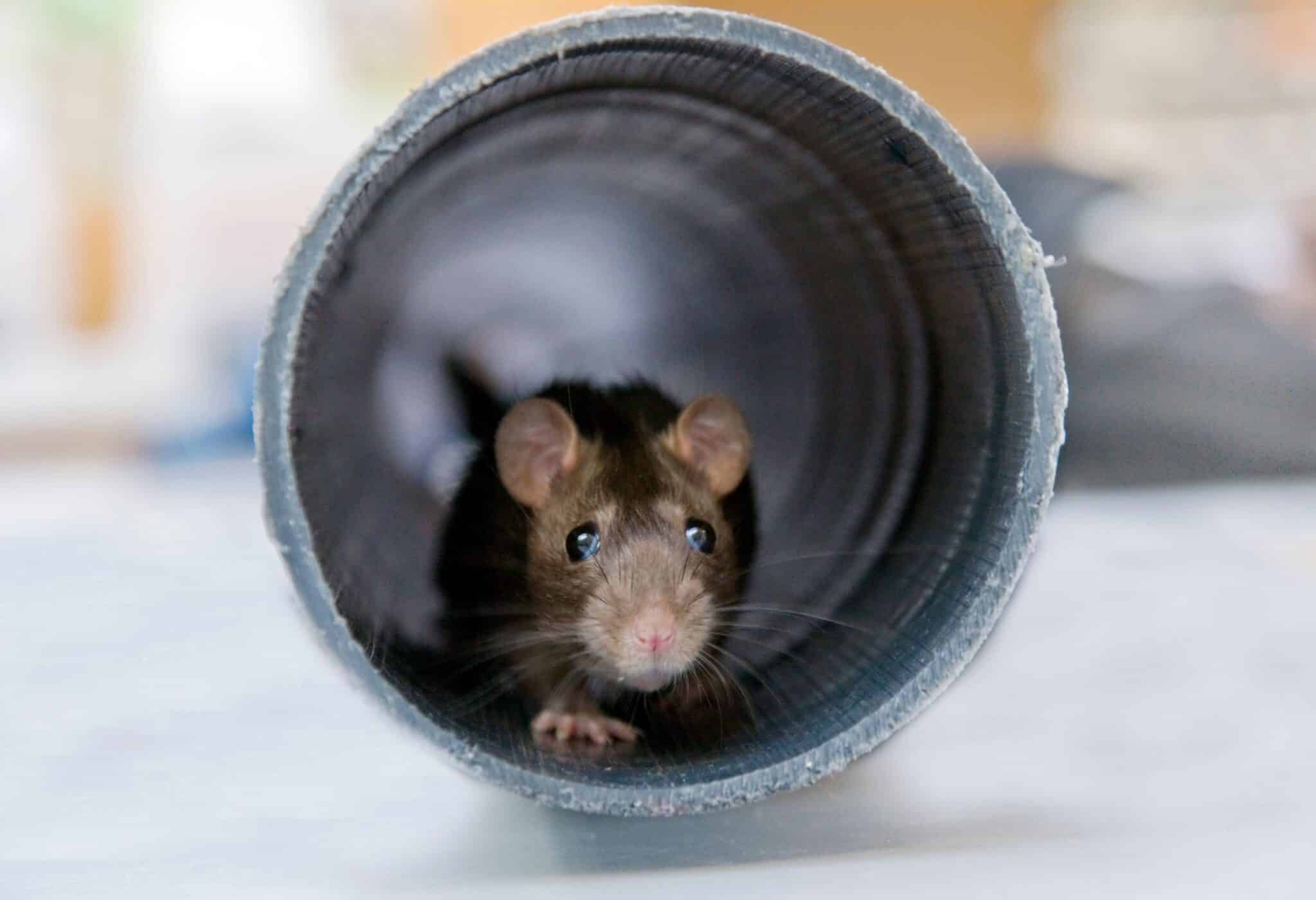
This is why people often report that ultrasonic devices seem to work for a week or two, then mysteriously “stop working”. The reality is the rats never actually left – they just got used to the noise. Rats are adaptable creatures built for survival. They rely far more on smell, touch, and memory than on sound alone. Within days, most will simply adjust and carry on as usual.
What the Science (and the Experts) Say
Do ultrasonic rat repellents work? Many studies have examined whether ultrasonic devices deliver on their promises. The findings consistently point in one direction: these devices are largely ineffective for long-term rat control:
- Rats initially react to new noises (startle response) and then adapt within days
- Effects vary wildly depending on room layout, objects and acoustics
- Some tests show zero effect, even in laboratory conditions
- No significant difference in rat activity between areas with ultrasonic devices and control areas without them
- No study has demonstrated long-term population control using ultrasonic devices alone.
Are ultrasonic rat repellers effective for sustained pest control? The evidence suggests not. Rats are remarkably adaptable creatures – they’ve survived alongside humans for thousands of years by being flexible and resilient.
Common misconceptions
A few myths crop up again and again:
- “My house feels quieter, so it must be working.”Rats are nocturnal and move silently. Lack of noise doesn’t equal success.
- “I plugged in three devices – that should cover it.”Sound waves don’t spread like smells. You can fill a house with gadgets and still miss all the key nesting spots.
- “If it works on insects, it works on rats.” Rats have completely different sensory systems to insects. Rats are far more resilient and far more skilled at navigating around irritants.

Proven Methods for Rat Control
So, if ultrasonic devices aren’t the answer, what is? Effective rodent control always comes down to three things: cutting off food sources, closing access points, and safely removing the existing rats. Rather than hoping electronic devices will solve your rat problem, focus on strategies with demonstrated success rates.
Practical solutions for keeping rats out
Before calling in help, there are a few measures that genuinely help deter rats:
- Seal gaps around doors, pipes, vents, and drains
- Keep food stored in airtight containers, both indoors and outdoors
- Fix leaks and dripping taps (rats love moisture)
- repair gaps around pipes and cables
- Clear out old nesting material in sheds, garages, and lofts
- Keep bins closed, secure, and away from entry points.
When to call professional pest control
If you’ve spotted droppings, scratching noises, gnawing damage, or movement in the corner of your eye, it’s past the point of gadgets and guesswork. Ultrasonic devices are designed to “repel”, not remove infestations. A professional rat pest control company can:
- Identify the entry points rats are using
- Inspect drains and sewers (a major access route)
- Install proper proofing, such as rodent-proof mesh and one-way rat valves
- Remove the active infestation safely and humanely
- Make sure the problem doesn’t return.
Do Ultrasonic Rat Repellents Work?
Here’s the honest answer: not well, not consistently and not in any scenario involving a real infestation. They may give you temporary relief, but they won’t keep rats out of a property that still has food sources, damaged brickwork, accessible drains, or unsealed entry points. The idea of a plug-and-play solution is attractive, but effective rat control typically requires a more comprehensive approach.
At Pest Stop Boys, we deal with rat infestations across Sussex every day. Ultrasonic devices might offer temporary relief, but nothing beats the reliability of expert rat pest control for long-term protection. Contact us for a thorough assessment and proven solutions that work.